The Press-Enterprise
- 2.8
- Rating
- 10.00K
- Installs
- Free
- Price

 Analysis by App-foxy
I spent time with The Press-Enterprise as a local news and magazine app, and my first impression was that its value depends heavily on where you live and what kind of news you actually want. It is built for information from Inland Southern California, so it is not trying to replace every national news source on your phone. Its best role is much narrower and, for the right reader, more useful: keeping local reporting close at hand instead of making you search through a broad news feed.
The app is published by MediaNews Group, Inc. and is free to install. It is rated for Everyone, runs on Android devices using version 8.0 or later, and the current release is 10.0.60. The audience is still relatively modest, with over 10K installs, while its average rating sits at 2.8 from around 500 ratings. I would not treat that score as a complete verdict, but I would take it as a reason to approach the app practically: test how well it fits your daily reading habits before deciding whether it deserves a permanent place on your home screen.
How I would decide whether it belongs on your phone
The first question is geographic. If your everyday life is connected to Inland Southern California, the app has a clear purpose. Local government, schools, public safety, transportation, community events, and neighborhood developments are easier to follow through a publication focused on the region than through a general national news application. If you live elsewhere, the central benefit quickly becomes less relevant.
You May Also Like

 Pandora - Music & Podcasts
Pandora’s Music Is Easy to Start, but Harder to Recover
Pandora’s strength is its low-effort path from a seed to a station. Its weak spot is how much confidence it asks you to place in connection, setup, and quiet recovery.

 8 Ball Pool
 Is Built on Rivalries, Rematches, and Routine
A close look at the rivalries, rematches, shared routines, and unanswered safety questions that turn a quick pool match into a persistent mobile community.

 Samsung Music
’s Quiet Strength Is Playing What You Already Own
Its reach comes less from spectacle than from dependable access to a personal library. That simplicity is both the app’s strongest retention engine and its ceiling.

 AccuWeather: Weather Radar
AccuWeather Review: A Quick, Clear Forecast for Everyday Decisions
For everyday plans, the best forecast is the one you can understand quickly. AccuWeather makes rain timing, radar, and local conditions easy to act on, with a few trade-offs.

 Hill Climb Racing
Why Hill Climb Racing Still Turns Crashes Into One More Run
A tiny car, a bumpy hill and one more upgrade: Hill Climb Racing keeps resurfacing because its simple chaos makes every near-miss feel personal.

 AliExpress - Shopping App
AliExpress Makes Global Shopping Feel Personal, but Shoppers Bear the Risk
AliExpress turns a global marketplace into a pocket-sized discovery engine. Its reach is useful, its shopping loop compelling, and its trade-offs easy to miss.
More From Our News Desk
View All News


The second question is whether you want a publication-based reading experience or an all-in-one news stream. General news apps are good at combining many outlets, topics, and viewpoints in one place. That convenience can also make local coverage feel buried. The Press-Enterprise takes the opposite approach: it gives one regional publication the main stage. I see that as a strength when I want depth and continuity around a place, but a limitation when I want international headlines, technology news, sports from several regions, or a wide range of editorial voices.
I would also consider how often you read local news. Someone who checks regional updates several times a week has a stronger reason to use a dedicated app than someone who only wants occasional headlines. A focused publication app can become part of a morning routine, but it may feel unnecessary if your news needs are already covered by a browser, social feeds, television, or a general news reader.
There is also a practical cost question. The app itself is free, which makes trying it low-risk, but it includes in-app purchases ranging from $14.99 to $174.99 per item. That matters if you expect to move beyond casual reading or encounter a paid access point. I would not assume that installing a free news app means every part of the reading experience will remain free. Before committing to a purchase, I would check exactly what the payment unlocks and whether it matches the amount of local coverage I expect to use.
A realistic morning routine
Imagine that I live in the Inland Empire and begin the day by checking what changed overnight. Rather than opening a broad news aggregator and scrolling past national stories, I could use this app to look for developments affecting nearby communities. If I am preparing for a commute, planning a school-day schedule, or simply trying to understand an issue being discussed locally, a regional publication is more likely to put those subjects in front of me than a general-purpose feed.
The important detail is that this is a habit app, not just an emergency lookup tool. Its usefulness grows when I return regularly and build context around ongoing local stories. Reading one isolated headline may tell me what happened; following the publication over several visits can help me understand how an issue is developing. That continuity is one of the strongest reasons to choose it over a collection of unrelated headlines.
What I look for before making it my main news app
When I evaluate a regional news app, I pay attention to more than the headline list. I want to know whether the organization of stories helps me distinguish urgent local developments from lighter reading, whether articles are comfortable to read on a phone, and whether returning to a story feels straightforward. I also consider whether the app reduces the need to open a browser, search the publication manually, or rely on social posts that may omit important context.
My advice is to use it during the exact moments when you normally seek local news. Try it before work, during a lunch break, and when a regional issue is actively unfolding. That gives you a better sense of its practical value than simply opening it once and judging the first screen. A focused news app should earn its place by shortening the path between your question and relevant local reporting.
Where the regional focus works best
The Press-Enterprise has a clear advantage over broad news apps when the location of a story matters more than the size of the headline. A national service may tell me that a policy changed, a storm is approaching, or a public issue is being debated. A regional publication is more likely to make the information meaningful to someone who needs to know how that subject affects Inland Southern California.
This focus can also make local discovery easier. Community news is often difficult to find in a general feed because it competes with stories designed for a much larger audience. A dedicated regional app gives local reporting a better chance of becoming part of my normal reading cycle. That is useful for residents, people who work in the area, families with local school or community connections, and anyone who has moved away but still wants a direct connection to the region.
Another strength is editorial continuity. When the same publication follows a local topic over time, I do not have to reconstruct the background from scattered posts. I can return to the publication as a consistent source and compare new developments with what I previously read. That does not make every article automatically complete, but it gives the news a more coherent shape than a fast-moving social timeline.
I also appreciate the distinction between local relevance and local convenience. A general browser search can find regional stories, but searching is an active task. A dedicated app changes the process into checking a known destination. That small difference matters on busy days. If I already know I want Inland Southern California news, opening a focused app is more efficient than repeatedly forming searches and filtering unrelated results.
Three ways I would use it beyond casual scrolling
First, I would use it as a regional briefing tool. Instead of reading every item, I would scan for stories connected to places, institutions, or issues that affect my week. The goal is not to consume the entire feed; it is to identify the few local developments worth reading carefully. This approach helps keep the app useful without turning news checking into an endless routine.
Second, I would use it to maintain context around slow-moving subjects. Local issues often develop over multiple reports rather than one dramatic update. Returning to the same publication gives me a better chance of recognizing names, decisions, and previous events. That is a more disciplined workflow than relying on a single shared post or a headline seen once.
Third, I would use it as a starting point for conversations and decisions that are genuinely local. If friends, relatives, or coworkers are discussing a regional event, a focused publication can help me move from vague awareness to a more informed understanding. I would still read critically and distinguish reporting from my own assumptions, but the app can provide a useful first layer of local orientation.
These uses reveal an important trade-off: the app is strongest when I want relevance, not variety. It does not need to offer everything to be valuable. It needs to make the regional information I care about easier to reach and easier to revisit.
Where the experience may create friction
The average rating of 2.8 suggests that not every reader has found the experience smooth or satisfying. A rating alone cannot explain each complaint, but it is enough to keep my expectations measured. I would pay attention to how quickly the app feels useful, how comfortable the reading flow is on my device, and whether the route from opening the app to reading a complete story feels natural.
The limited install base also reinforces the idea that this is a specialized choice rather than a universal news recommendation. A smaller audience is not automatically a flaw, especially for a publication serving a defined region, but it does mean that I would choose the app for its local purpose rather than because it is among the most widely used news tools.
The purchase range deserves careful attention as well. Free installation is attractive for sampling the publication, but the possible cost of individual in-app purchases means I would not begin with an assumption that every reader receives the same level of access without payment. If I mainly want occasional headlines, the free entry point may be enough to judge the fit. If I plan to rely on it as a primary source, I would review the purchase screen closely before spending money.
How it compares with the usual alternatives
A general news aggregator is better when I want many publications and subjects in one place. It can save time for readers who move between national, international, business, entertainment, and local stories. The trade-off is that Inland Southern California coverage may be less prominent, and the reading experience can feel fragmented because different sources present news in different ways.
Reading the publication through a mobile browser is a sensible alternative for occasional visitors. A browser avoids adding another dedicated app and may work well when I only need to look up one story. The dedicated app makes more sense when I want a repeatable local-news routine and prefer opening one focused destination instead of searching each time.
Social media is faster for discovering what people are discussing, but it is less dependable as my only source for regional reporting. Posts can be brief, emotionally charged, or separated from the background needed to understand them. I would use social platforms to notice topics and this app to pursue local coverage with more context.
Finally, a national newspaper or broad digital subscription may be the better choice for someone whose priorities extend well beyond the Inland Empire. If I need strong coverage across several regions and categories, a regional app could feel too narrow. Choosing it would mean accepting that specialization is the point, not a missing feature to be judged against an entirely different product.
The real cost of switching to a dedicated local source
Moving from a familiar news routine to this app takes more than installing it. I would need to decide when to check it, which local subjects deserve regular attention, and whether it replaces another source or simply supplements one. That adjustment is small, but it determines whether the app becomes useful or remains an icon I rarely open.
I would not immediately abandon my existing national news source. Instead, I would give this app a defined job: local reporting in Inland Southern California. Keeping the roles separate prevents disappointment. The regional app can handle place-specific awareness while another source covers broader events. After a week or two of normal use, I could decide whether that extra step provides enough value to continue.
There is also a financial switching cost if I choose an in-app purchase. The price range extends from $14.99 to $174.99 per item, so I would treat any payment as a deliberate decision rather than an automatic upgrade. I would first establish that I regularly read the publication and that its local focus fills a real gap. Paying before forming that habit would be backwards.
For households, I would also think about who will actually use it. A local-news app can be worthwhile for one person who follows regional affairs closely but unnecessary for another family member who only wants national headlines. The free installation makes shared testing simple, yet the possible purchase cost means each reader should understand what they are paying for instead of assuming the same value applies to everyone.
Who should choose it and who should skip it
I would recommend trying The Press-Enterprise if you live in or have strong ties to Inland Southern California and want a direct, repeatable way to follow regional news. It is especially suitable for readers who feel that national feeds overlook the details that affect their community. It can also suit people who prefer one publication’s ongoing coverage over a constantly changing mixture of sources.
I would be more hesitant to recommend it to someone outside the region, someone who wants a single app covering the whole world, or someone who rarely reads news at all. Those readers may get more value from a general news service or from occasional browser searches. I would also advise caution for anyone unwilling to consider in-app purchases, since the free download does not remove the need to understand the paid access options.
My final recommendation is conditional but positive: choose it for focused local awareness, not as your only source for every kind of news. The free entry point makes it reasonable to test, and the regional specialization gives it a clear purpose that broad alternatives do not always provide. At the same time, the modest average rating, narrow geographic scope, and possible purchase costs mean I would judge it by my own daily experience rather than by expectations created by the app category alone.
For me, the deciding test is simple. If opening the app regularly helps me understand what is happening near the places and people I care about, it has earned its place. If I keep needing another service for the subjects I actually follow, or if the reading process feels more troublesome than a browser search, I would leave it as an occasional resource. That makes The Press-Enterprise a targeted recommendation: worthwhile for the right regional reader, but not a universal replacement for a broader news habit.
FAQs for The Press-Enterprise
01What is The Press-Enterprise app?
The Press-Enterprise app is a digital news platform focused primarily on Riverside County and the Inland Empire in California. It provides access to local reporting, breaking news, politics, education, crime, business, sports, entertainment, and community stories. The app is designed for readers who want to follow regional developments through a smartphone or tablet rather than relying only on the newspaper’s printed edition.
02Is The Press-Enterprise app free to download and use?
The app can generally be downloaded free of charge, but access to all articles and premium content may require a subscription or account, depending on the current publisher policy. Some news stories may be available without payment, while frequent readers can encounter a digital paywall. Before downloading, it is worth checking the subscription terms, trial conditions, renewal details, and whether in-app purchases are offered.
03What type of news and features are available in the app?
The Press-Enterprise typically covers local and regional news, including public safety, courts, schools, government, transportation, housing, sports, business, and cultural events. Depending on the version installed, readers may also find breaking-news alerts, photo galleries, search tools, saved articles, newsletters, and personalized notifications. The exact selection can change as the publisher updates its digital service.
04Does The Press-Enterprise app require an internet connection?
An internet connection is normally required to download the latest articles, images, videos, and breaking-news updates. Content may not load correctly when the device is offline or has a weak connection. Some versions or subscription features may allow articles to be saved for later reading, but users should not assume that every story is available offline. Mobile data usage can also increase when viewing multimedia content.
05Is The Press-Enterprise app available for both Android and iPhone?
Availability may depend on the publisher’s current app strategy and the region associated with your device’s app store. Users should search for the official The Press-Enterprise listing on Google Play for Android or the Apple App Store for iPhone and iPad, checking the publisher name, ratings, update date, and privacy information before installing. Avoid unofficial copies or similarly named applications.
Pros
- Covers Inland Empire news with strong local reporting and community focus.
- Offers timely updates on breaking stories
- politics
- crime
- and local events.
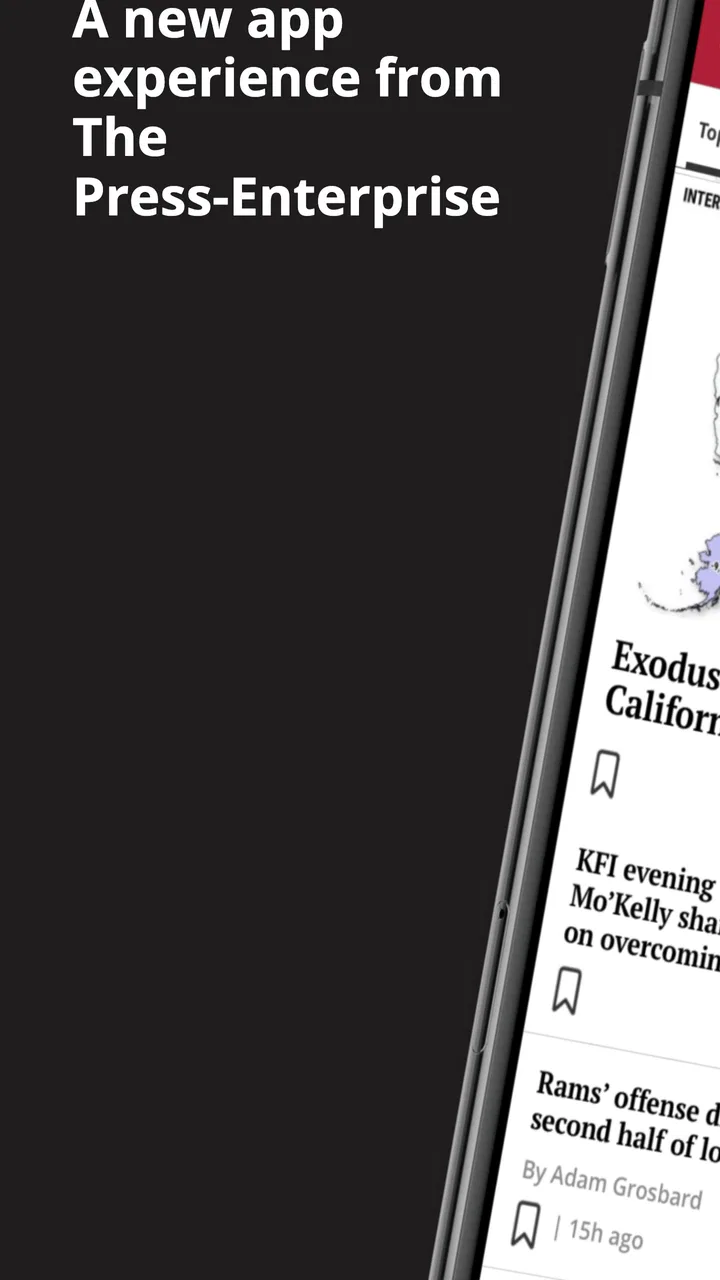
- Clean layout makes headlines and articles easy to browse on mobile.
- Includes regional sports coverage for teams and schools in the area.
- Digital access can be convenient for subscribers who want news on the go.
Cons
- Many full articles may require a paid subscription or account.
- Coverage is mainly regional and may feel limited for national news readers.
- Some content can load slowly depending on connection or ad activity.
- Frequent notifications may feel excessive unless carefully customized.
- The app’s usefulness depends heavily on interest in Inland Empire news.

The Press-Enterprise
Gallery